Asakusa and Sensoji Temple (浅草と浅草寺)
Asakusa is a district in Tokyo, Japan, known for its traditional atmosphere and historic sites. One of the most famous
landmarks in Asakusa is Sensoji Temple (also known as Asakusa Kannon Temple), which is one of Tokyo's oldest and most
significant Buddhist temples. Sensoji Temple is dedicated to Kannon Bosatsu, the Buddhist goddess of mercy, and it's a
major cultural and religious site in Tokyo. The temple is characterized by its imposing red lantern gate, called
Kaminarimon, which marks the entrance to the temple grounds. Beyond the gate is Nakamise-dori, a bustling shopping street
lined with souvenir shops and food stalls selling traditional Japanese snacks and crafts.
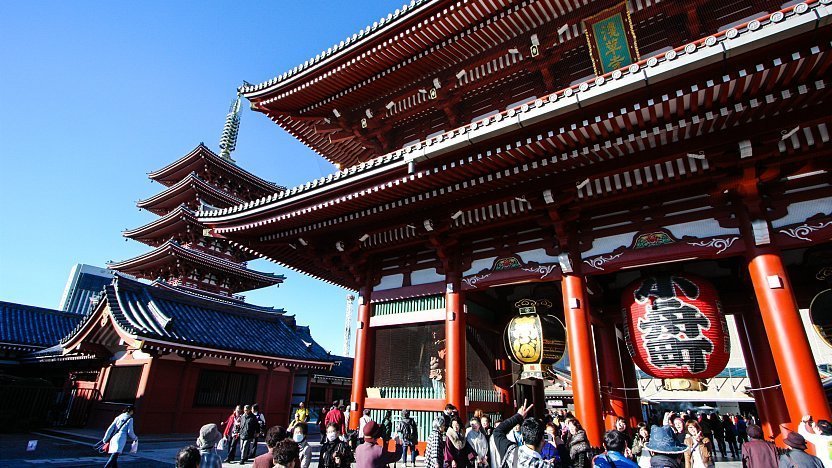
Visitors can explore the temple complex, which includes the main hall, pagoda, and various smaller shrines and gardens.
Many visitors also participate in traditional rituals such as burning incense for good luck and fortune, as well as
omikuji (fortune-telling paper strips).Sensoji Temple is particularly popular during festivals such as the Sanja
Matsuri in May, when the streets around the temple are filled with lively processions and traditional performances.
Location
Asakusa is a district in Tokyo, Japan, known for its historic streets and cultural landmarks. Sensoji Temple, one of
Tokyo's oldest and most significant Buddhist temples, is located in Asakusa. The temple is easily accessible from
Asakusa Station, which is served by various train and subway lines, including the Tokyo Metro Ginza Line, Tobu Skytree
Line, and Toei Asakusa Line. Once you arrive at Asakusa Station, you can follow the signs or ask locals for directions
to Sensoji Temple, which is a short walk from the station. The temple's main entrance gate, called Kaminarimon, is a
famous landmark and a popular spot for tourists to take photos.
Historical Highlights
Sensoji Temple, also known as Asakusa Kannon Temple, is one of Tokyo's oldest and most revered temples. According to
legend, it was founded in 628 AD when two fishermen, Hinokuma Hamanari and Hinokuma Takenari, discovered a statue of
the Buddhist goddess Kannon in the nearby Sumida River. The temple was subsequently built in her honor, making it
Tokyo's oldest temple.Throughout its long history, Sensoji Temple has faced numerous challenges, including fires and
destruction during World War II. However, it has been rebuilt and restored multiple times, showcasing the resilience
of its religious and cultural significance.
Visitor Information
Sensoji Temple is open every day, and it is generally accessible at all hours. However, the temple buildings and main
hall have specific opening hours, usually from early morning until late afternoon or early evening.There is no
admission fee to enter Sensoji Temple or its grounds. However, there may be charges for specific activities or
events within the temple complex.
Story and Legends
The Legend of the Kannon Statue: According to legend, Sensoji Temple was founded in 628 AD when two fishermen, Hinokuma
Hamanari and his brother Hinokuma Takenari, discovered a small golden statue of the Bodhisattva Kannon (the Goddess of
Mercy) in the nearby Sumida River. Despite repeatedly casting their nets into the river, they could only retrieve the
statue. Recognizing its divine significance, they enshrined it in a small temple, which later expanded to become
Sensoji Temple. This legend is the basis for the temple's popular nickname, "Asakusa Kannon."The Thunder Gate, or
Kaminarimon, is the outer gate leading to Sensoji Temple. It is famous for its massive paper lantern and imposing
statues of the Shinto gods Raijin (God of Thunder) and Fujin (God of Wind). According to legend, during the Edo period,
a thunder god descended to Earth and left behind the massive lantern as a gift to Sensoji Temple. The gate was named
after this event and has since become an iconic symbol of Asakusa.